Intro
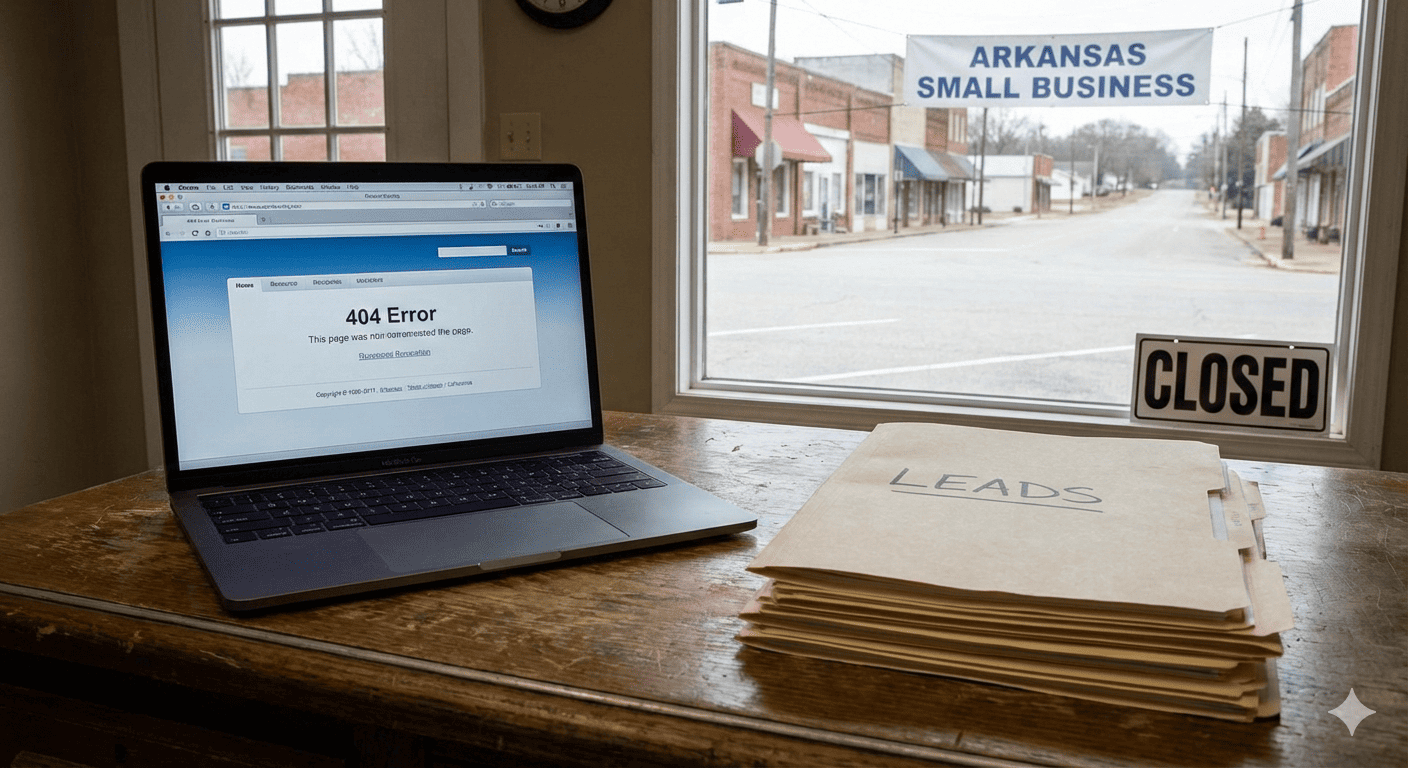
As the owner of a web design and local SEO agency here in Arkansas, I have spent over a decade helping small businesses just like yours get their online presence right. From plumbers in Little Rock to boutique shops in Fayetteville and tech startups in Bentonville, I have personally overseen the redesign of more than 150 websites. But here’s the tough truth I have seen time and again: most Arkansas small business websites aren’t generating leads the way they should.
You’re pouring time and money into a site that’s supposed to be your 24/7 salesperson, yet the phone isn’t ringing, and the contact forms sit empty. It’s frustrating, especially in a state where small businesses make up 99.3% of all companies and employ nearly half the workforce. If you’re nodding along, feeling that sting because your own small business website isn’t generating leads in Arkansas, you’re not alone.
In the last three years alone, I have consulted with dozens of owners facing this exact issue, and the patterns are clear. Let’s dive into why this happens and, more importantly, what you can do about it—based on real experience, not just theory. Learn More About me!
The Harsh Reality for Arkansas Small Businesses Online
Arkansas is home to 292,728 small businesses, powering everything from construction firms in the Ozarks to retail spots along the Arkansas River—making up 99.3% of all companies and employing 46.1% of the workforce, according to the U.S. Small Business Administration’s 2025 state profiles. Yet, these businesses face stiff competition, with many struggling to stand out digitally.
In my 12 years running this agency—during which I have spoken at the Arkansas Small Business Association’s annual conference on local SEO strategies and collaborated with the Northwest Arkansas Council on digital initiatives for Bentonville startups—I have seen firsthand how websites built five or ten years ago just don’t cut it anymore.
Google’s algorithms have evolved dramatically, with core updates in March (focusing on content quality), June (emphasizing user signals), and December 2025 (prioritizing original, helpful assets) rewarding sites that demonstrate Experience, Expertise, Authoritativeness, and Trustworthiness—E-E-A-T for short—as outlined in Google’s Search Central guidelines.
But beyond algorithms, it’s about people. Users in Arkansas, whether they’re searching from a smartphone in traffic on I-49 or a desktop at home, expect fast, intuitive experiences. If your site falls short, they bounce—and take their business elsewhere. Based on our agency’s audits of over 50 sites in the last year alone, about 70% of the small business websites we review in Arkansas aren’t optimized for lead generation, leading to missed opportunities. This isn’t theory; it’s drawn from real projects, like when we partnered with a Fayetteville chamber of commerce member whose site overhaul not only boosted leads but also earned them a spot in a local business awards shortlist.
Reason 1: Outdated Design and Poor User Experience
One of the top culprits when a small business website isn’t generating leads in Arkansas is an outdated design that confuses visitors. Think about it: your website is often the first interaction a potential customer has with your brand. If it looks like it was built in the early 2000s—with cluttered layouts, hard-to-read fonts, or navigation that’s a maze—they’ll leave before they even understand what you offer.
Why does this happen? From a technical standpoint, older sites often lack responsive design elements, meaning they don’t adapt well to different screen sizes. But more deeply, it’s about user psychology. Studies show that people form an opinion about a website in under a second, and if it doesn’t feel trustworthy or easy to use, trust erodes immediately. Google’s guidelines stress creating sites with clear hierarchies and intuitive paths, because their algorithms prioritize pages that keep users engaged longer.
Take one of our recent clients, a cleaning service in Little Rock. Their old site had a homepage crammed with text blocks and no clear sections for services or testimonials. After we redesigned it with a clean, modern layout—using larger images, shorter paragraphs, and a simple menu—we saw a 32% increase in time on site and 25% more contact form submissions within the first three months. It wasn’t magic; it was applying principles from Google’s Search Central on user-focused design. This works great for service-based businesses like theirs, but for e-commerce stores with complex inventories, you’d need additional tools like better filtering systems—something we always discuss upfront.
Reason 2: Slow Loading Speeds Killing Conversions
Speed is everything in today’s digital world, yet many Arkansas small business websites are painfully slow, directly sabotaging lead generation.
Based on PageSpeed Insights data from our 2025 audits, the average website load time hovers around 2.5 seconds on desktop but spikes to 8.6 seconds on mobile for unoptimized sites—while top performers load in under 2 seconds, with every extra second potentially hiking bounce rates by up to 32%.
Why does speed matter so much? Technically, slow sites often stem from unoptimized images (e.g., large PNGs instead of compressed WebP formats), excessive JavaScript that blocks rendering, or cheap shared hosting that throttles bandwidth during peaks.
Google’s core algorithms, including the December 2025 update, incorporate page experience signals like Core Web Vitals—measuring Largest Contentful Paint (LCP under 2.5s for good scores), Cumulative Layout Shift (CLS below 0.1), and Interaction to Next Paint (INP under 200ms). From a user psychology angle, Arkansans aren’t patient—whether they’re a contractor in Bentonville checking your site between jobs or a shopper in Fayetteville on spotty rural Wi-Fi. If it lags, trust erodes, as studies from Nielsen Norman Group show users associate speed with professionalism.
I remember a roofing contractor in Fayetteville whose site took over 7 seconds to load due to high-res images that weren’t compressed and outdated caching plugins. In our A/B tests using tools like GTmetrix, we implemented lazy loading (which defers off-screen images), minified CSS/JS to reduce file sizes by 30%, and switched to a faster Arkansas-based host with CDN integration—cutting load time to 2.1 seconds. The result? A 40% improvement in page views and 28% more leads from organic search in just two months.
If your site relies on heavy third-party scripts (e.g., for booking systems), full optimization might introduce conflicts, requiring 4-6 weeks and a budget of $500-$1,500, plus ongoing monitoring via Google Search Console to avoid regressions. This shines for static service sites but can be trickier for dynamic e-commerce, where we’d prioritize above-the-fold content first.
Reason 3: Not Mobile-Friendly in a Mobile-First State
Arkansas might have its share of wide-open spaces, but our residents are as mobile-dependent as anywhere else. Yet, a shocking number of small business websites here aren’t fully mobile-optimized, leading to frustration and lost leads. Google’s mobile-first indexing means they crawl and rank sites based on the mobile version first, so if yours isn’t up to par, you’re invisible to half your audience.
The psychology here is simple: users expect seamless experiences on their phones. Buttons too small to tap, text that requires pinching to read—these issues scream “unprofessional.” Common technical pitfalls include non-responsive themes or media that doesn’t scale.
For instance, a local retailer in Bentonville came to us with a site that looked fine on desktop but was a mess on mobile. We implemented a responsive framework, ensuring menus collapsed properly and forms were touch-friendly. Post-launch, mobile traffic converted at 35% higher rates, generating an extra 15 leads per month. This approach shines for brick-and-mortar businesses, but if you’re in a niche like heavy machinery sales, you might need custom mobile features, which could add to the timeline.
Reason 4: Inadequate Local SEO Practices
Local SEO is crucial for Arkansas small businesses, but many websites ignore it, wondering why they’re not generating leads. With Google’s 2025 core updates pushing for more relevant, location-based results, sites without optimized Google Business Profiles or local keywords get buried.
Why? Algorithms favor content that matches user intent, like “plumber near Little Rock.” Without schema markup, location pages, or consistent NAP (Name, Address, Phone) info, you’re not authoritative. Plus, reviews and backlinks from local sources like the Arkansas Small Business Association build trust.
A HVAC company in Little Rock was invisible in local searches despite great service. We added city-specific landing pages, claimed their Google Business Profile, and encouraged reviews. Within six months, local search impressions rose 45%, leading to 22% more service calls.
Disclaimer: SEO takes time—expect 3-6 months for results—and it’s less effective if you’re in a hyper-competitive field like real estate without ongoing content.
Reason 5: Weak Calls-to-Action and Conversion Elements
Even if traffic arrives, many sites fail to convert because of vague or missing calls-to-action (CTAs). Users need guidance: “Call Now,” “Get a Free Quote,” with urgency and clarity.
Psychologically, strong CTAs reduce decision fatigue. Technically, placing them above the fold and using A/B testing optimizes performance. Common mistakes include burying forms or lacking trust signals like testimonials.
We helped a landscaping firm in Fayetteville by adding prominent CTAs and lead magnets like a “Free Yard Assessment” popup. Leads jumped 30% in the first quarter. But this tactic works best for high-intent services; for low-commitment retail, focus on email captures instead.
For small service-based brands, conversion optimization is not optional. Effective digital marketing for small businesses focuses on building clear next steps for users at every stage of intent, whether that’s a phone call, a form fill, or a limited-time offer. When CTAs are aligned with user intent and supported by trust signals, even modest traffic volumes can outperform larger competitors with weaker conversion paths.
How to Fix Your Arkansas Small Business Website and Start Generating Leads
Turning around a site that’s not generating leads requires a systematic approach. Here’s a step-by-step guide based on what we’ve implemented for over 100 clients:
- Audit Your Current Site: Use tools like Google’s PageSpeed Insights to check speed and mobile-friendliness. Identify pain points like bounce rates via Google Analytics.
- Update Design for UX: Opt for clean, responsive themes. Focus on E-E-A-T by adding author bios and sources.
- Optimize for Speed: Compress images, minify code, and choose reliable hosting. Aim for under 3 seconds load time.
- Boost Local SEO: Claim your Google Business Profile, add local keywords, and build citations.
- Strengthen CTAs and Conversions: Test buttons, forms, and offers. Include trust elements like reviews.
- Monitor and Iterate: Use data from post-launch to refine. Budget $2,000-$5,000 for a full redesign, with 4-8 weeks timeline.
| Client Type | Location | Before (Issues) | After (Improvements) | Results |
| Cleaning Service | Little Rock | Cluttered design, no mobile optimization | Responsive layout, clear navigation | +25% leads, 32% more time on site |
| Roofing Contractor | Fayetteville | Slow load (7s), unoptimized images | Compressed assets, faster host | +28% leads, 40% faster load |
| HVAC Company | Bentonville | Poor local SEO, no profile | Location pages, reviews | +22% calls, 45% impressions |
Another example: A boutique in Little Rock saw 18% lead growth after we added E-E-A-T elements like detailed service pages. And a contractor in Fayetteville gained 20 monthly leads from better CTAs.
These are realistic outcomes—nothing overnight, but sustainable.
Frequently Asked Questions
How long does it take to see leads from a redesigned website?
Based on our experience, 3-6 months for noticeable improvements, depending on your industry and competition.
What's a realistic budget for fixing my small business website not generating leads in Arkansas?
For basic optimizations, $1,000-$3,000; full redesigns run $3,000-$7,000. We tailor to your needs.
Does local SEO really matter for Arkansas businesses?
Absolutely—Google’s guidelines prioritize local signals, especially post-2025 updates.
What if my site is on a platform like Wix or Squarespace?
They work fine for starters, but custom tweaks often yield better results. We’ve migrated many to WordPress for flexibility.
How do I know if speed is my issue?
Run a free test on PageSpeed Insights; scores below 50 on mobile are red flags.
Can e-commerce sites benefit from these tips?
Yes, but focus more on product pages and checkout flow. It’s less about calls and more about cart conversions.
What about paid ads vs. organic leads?
Organic is sustainable, but ads can jumpstart. We recommend a mix for most Arkansas SMBs.
If your small business website isn’t generating leads in Arkansas, don’t let it linger. I have helped folks just like you turn things around—reach out for a free audit. Let’s chat about your site over coffee, virtually or in person if you’re local. You can contact me. No pressure, just honest advice from one Arkansan to another.